
How to Identify Calcite: Hardness, Streak, Luster and Tests
Quick answer
Calcite (mineral): 6 identifying properties, 1 home test, and how to tell it from Fluorite and Dolomite / Dolostone, quoted from geology department and survey sources.
Updated 2026-09-10 · Sources: University of Minnesota Common Minerals, Illinois State Geological Survey (via Project Gutenberg)
Found one? Take a photo to identify it.
Download on the App StoreWhat are the key facts?
- Type: Mineral
- Mohs hardness: 3 (locally 2.5)
- Streak: White
- Luster: Vitreous luster in crystals; massive form is dull.
- Color: Transparent to translucent crystals are colorless, white, or light-colored; massive forms are often tan, gray, or white.
- Cleavage or fracture: Three directions of perfect cleavage, producing rhombohedrons.
- Specific gravity: 2.7
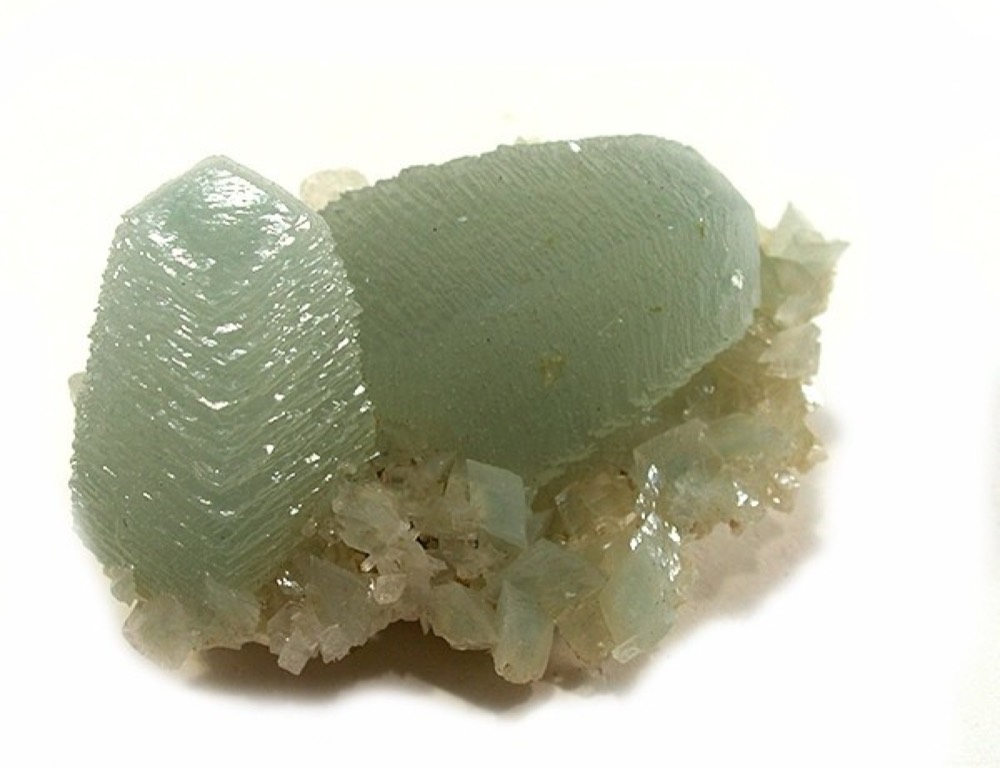
What Calcite looks like
The properties that identify Calcite — mohs hardness: 3 (locally 2.5); streak: White; luster: Vitreous luster in crystals; massive form is dull; color: Transparent to translucent crystals are colorless, white, or light-colored; massive forms are often tan, gray, or white; cleavage or fracture: Three directions of perfect cleavage, producing rhombohedrons; specific gravity: 2.7. Hardness, streak and cleavage are the reliable ones; color alone rarely settles it.
Tests you can do at home
- Dilute hydrochloric acid test: a drop of dilute HCl makes calcite fizz vigorously. Safety: Dilute hydrochloric acid is corrosive. Wear eye protection and gloves, avoid skin and eye contact, use only a few drops in a well-ventilated area, and rinse tools immediately afterward. Never use concentrated acid, and do not let minors handle it unsupervised.
Often confused with
- [Fluorite](/lookup/rocks-and-minerals/fluorite): Fluorite does not fizz in dilute HCl, while calcite does; fluorite (hardness 4) is slightly harder than calcite (hardness 3).
- Dolomite / Dolostone: Limestone (mostly calcite) fizzes immediately and vigorously in dilute HCl, while dolomite must be powdered before it will fizz.
Where it is found in North America
Widespread from hot springs and underground caverns to coral reefs and seashells — found in limestone, marble, cave deposits, and veins.
How to photograph it for identification
Photograph a fresh, unweathered surface in daylight, then a second shot of any crystal faces or broken edge. Include a coin for scale. If you did a streak test, photograph the streak next to the specimen. The app suggests the likely mineral or rock; confirm with hardness and the tests above before you label it.
FAQ
How hard is Calcite on the Mohs scale?
3 (locally 2.5). A fingernail is about 2.5, a copper coin about 3, a steel knife 5.5 and glass about 5.5, so test against those.
What color streak does Calcite leave?
White. Rub the specimen on an unglazed porcelain tile; the powder color is the streak, and it is more consistent than the specimen color.
How do I tell Calcite from Fluorite?
Fluorite does not fizz in dilute HCl, while calcite does; fluorite (hardness 4) is slightly harder than calcite (hardness 3).
What is the simplest test for Calcite?
Dilute hydrochloric acid test: a drop of dilute HCl makes calcite fizz vigorously.
More in Rock and Mineral Identification Reference
- How to Identify Quartz: Hardness, Streak, Luster and Tests
- How to Identify Orthoclase (Potassium Feldspar): Hardness, Streak, Luster and Tests
- How to Identify Plagioclase Feldspar: Hardness, Streak, Luster and Tests
- How to Identify Muscovite (White Mica): Hardness, Streak, Luster and Tests
- How to Identify Biotite (Black Mica): Hardness, Streak, Luster and Tests
- How to Identify Pyrite (Fool's Gold): Hardness, Streak, Luster and Tests
- How to Identify Magnetite: Hardness, Streak, Luster and Tests
- How to Identify Hematite: Hardness, Streak, Luster and Tests
- How to Identify Galena: Hardness, Streak, Luster and Tests
- How to Identify Fluorite: Hardness, Streak, Luster and Tests
- How to Identify Gypsum: Hardness, Streak, Luster and Tests
- How to Identify Talc: Hardness, Streak, Luster and Tests
Related
See what's actually under your feet.
Start with a single scan.
Found one? Take a photo to identify it.
Sources
- University of Minnesota Common Mineralscommonminerals.esci.umn.edu/minerals-f/calcite-and-aragonite
- University of Minnesota Common Mineralscommonminerals.esci.umn.edu/minerals-f/fluorite
- Illinois State Geological Survey (via Project Gutenberg)www.gutenberg.org/files/66308/66308-h/66308-h.htm
Compiled by the RockLens editorial team
Every fact on this page is taken from the sources listed above; numbers and prices are copied from the source, and prices name the guide or auction and its date. Research and drafting were assisted by AI, and each claim was then checked against the cited sources. Checked 2026-09-10. We do not buy, sell or grade items; the app identifies what you photograph and points you to these references.