
How to Identify Quartz: Hardness, Streak, Luster and Tests
Quick answer
Quartz (mineral): 6 identifying properties, 1 home test, and how to tell it from Calcite, quoted from geology department and survey sources.
Updated 2026-09-25 · Sources: National Park Service, University of Minnesota Common Minerals, Wikipedia, thestonecircle.co.uk
Found one? Take a photo to identify it.
Download on the App StoreWhat are the key facts?
- Type: Mineral
- Mohs hardness: 7 (very hard)
- Streak: White
- Luster: Vitreous (glass-like) luster in crystals; massive form is dull or waxy.
- Color: Usually colorless or white; impurities can produce a variety of colors.
- Cleavage or fracture: No cleavage; conchoidal fracture.
- Specific gravity: 2.6–2.65
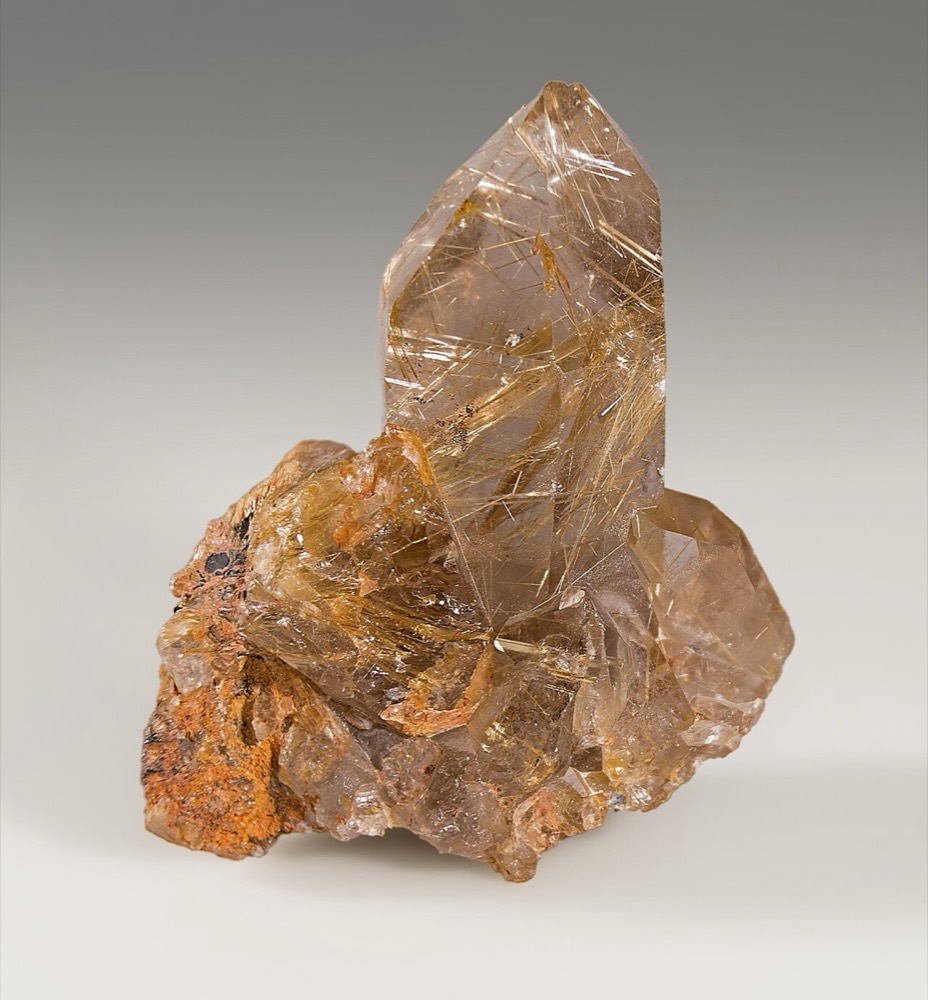
What Quartz looks like
The properties that identify Quartz — mohs hardness: 7 (very hard); streak: White; luster: Vitreous (glass-like) luster in crystals; massive form is dull or waxy; color: Usually colorless or white; impurities can produce a variety of colors; cleavage or fracture: No cleavage; conchoidal fracture; specific gravity: 2.6–2.65. Hardness, streak and cleavage are the reliable ones; color alone rarely settles it.
Tests you can do at home
- Hardness test: quartz scratches glass (glass is about 5.5, quartz is 7), and its fracture is as sharp as broken glass. Safety: Scratching glass or striking quartz can produce sharp fragments. Wear eye protection and gloves, and avoid striking it with bare hands.
Often confused with
- [Calcite](/lookup/rocks-and-minerals/calcite): Calcite has a hardness of only 3 — a fingernail can't scratch it but a knife can, and it fizzes in dilute hydrochloric acid. Quartz has a hardness of 7, cannot be scratched by a knife, and does not react with acid.
Where it is found in North America
Widespread in Paleozoic sandstone units across the Upper Midwest (e.g., the St. Peter Sandstone in southern Minnesota/Wisconsin), and in Lake Superior agates.
How to photograph it for identification
Photograph a fresh, unweathered surface in daylight, then a second shot of any crystal faces or broken edge. Include a coin for scale. If you did a streak test, photograph the streak next to the specimen. The app suggests the likely mineral or rock; confirm with hardness and the tests above before you label it.
What pure quartz looks like
Pure quartz, called rock crystal or clear quartz, is colourless and transparent or translucent, according to Wikipedia. Its ideal crystal is a six-sided prism ending in a six-sided point at one or both ends; the University of Minnesota notes quartz crystals are most commonly hexagonal prisms.
In the field you rarely see perfect crystals. Massive quartz, as in veins and pebbles, is usually white and milky, and the University of Minnesota describes it as dull or waxy rather than glassy. Quartz is often twinned, distorted or grown into neighbouring crystals, so count the sides of any prism you can see: six is the quartz signature.
Quartz crystals can be large. Wikipedia records the largest documented single crystal, found near Itapore, Goiaz, Brazil, at about 6.1 by 1.5 by 1.5 m.
Rocks and minerals mistaken for quartz
Calcite is covered above. These are the others the University of Minnesota separates from quartz, each with the one test that settles it:
- [Feldspar](/lookup/rocks-and-minerals/orthoclase-feldspar). Nearly as hard (6) and just as common in granite, but it has two cleavages meeting at nearly 90°, giving flat, stepped breaks. Quartz has no cleavage and breaks in curved, shell-like surfaces. Feldspar is usually opaque; quartz tends to look like clear glass.
- [Fluorite](/lookup/rocks-and-minerals/fluorite). Often purple, so it passes for amethyst. It is only hardness 4, so a steel nail scratches it, and it grows as cubes or octahedra rather than six-sided prisms.
- [Halite](/lookup/rocks-and-minerals/halite). Clear like rock crystal, but soft (2.5) with perfect cubic cleavage. A fingernail-and-coin test tells them apart; there is no need to taste it.
- Glass. The commonest imitation of clear quartz; our crystal identification page covers how to tell glass from crystal.
- Chalcedony, chert and agate. These are quartz too, just in crystals too small to see; see our chalcedony geode page.
Two more home tests: vinegar and specific gravity
The Stone Circle's quartz guide adds two tests that need nothing more than a kitchen:
- Vinegar. Put a few drops of white vinegar on the specimen. Calcite reacts with small frothy bubbles; quartz does not react at all.
- Specific gravity. Weigh the dry specimen, then find the weight of water it displaces, and divide the first by the second. Quartz should give about 2.65, matching the University of Minnesota's range of 2.6 to 2.65. Fluorite, at 3.0 to 3.3, comes out noticeably heavier.
Both are gentle on the specimen. The scratch test above is still the fastest single check.
How common quartz is, and what it is worth
Quartz is one of the most common minerals you will ever pick up. Wikipedia ranks it the second most abundant mineral in Earth's lithosphere, at about 12% by mass, and the University of Minnesota says it can make up to 25% of the volume of granite. Most mined quartz is worth very little: the University of Minnesota notes the bulk goes into construction as aggregate for concrete.
Well-formed crystals are a different matter. Dealer asking prices on FossilEra, checked 25 September 2026, from 295 quartz crystal listings priced US$3 to US$29,000:
- Clear quartz cluster, Colombia, 5.8 inches: US$335.
- Clear quartz cluster, Colombia, 9 inches: US$495.
- Dark smoky quartz cluster on a stand, Brazil, 16 inches: US$1,150.
- Amethyst geode section, Uruguay, 7 inches: US$275.
Price follows clarity, sharp undamaged points, size and a named locality. A milky vein pebble is worth nothing; a clean, sharp cluster can be worth hundreds.
About this update
The sections added on 25 September 2026 were researched and drafted with AI assistance and checked line by line against the sources listed on this page. Prices are dealer asking prices seen on that date, not appraisals. Never taste a mineral to identify it.
How to identify milky quartz
Milky quartz is ordinary quartz made white and cloudy by tiny trapped bubbles, so you identify it with the same tests as any quartz, plus its colour. Wikipedia attributes the white colour to minute fluid inclusions of gas, liquid or both trapped as the crystal grew, and Geology In says these inclusions scatter light to give the cloudy look.
The checks, in order:
- Colour and clarity. Faint to deep milky white, translucent to opaque (Geology In; Wikipedia).
- Hardness 7. It scratches glass and a steel knife (Geology In).
- No cleavage. It breaks with curved, shell-like (conchoidal) to irregular surfaces, never flat cleavage planes (Geology In).
- Glassy to greasy lustre on a fresh break (Geology In).
- No fizz. No reaction to dilute acid or vinegar, unlike white calcite (Geology In).
- Specific gravity about 2.65 (Wikipedia; Geology In).
It is usually massive, as vein fillings and white pebbles, but well-formed six-sided crystals are also common (Geology In).
Milky quartz or something else?
Several white minerals and rocks pass for milky quartz. One test separates each:
- White [calcite](/lookup/rocks-and-minerals/calcite). Hardness 3, perfect rhombohedral cleavage, and it fizzes in dilute acid; quartz does not (Geology In).
- White feldspar. Hardness 6 to 6.5 with two cleavages at about 90° and a pearly lustre; see orthoclase and plagioclase (Geology In).
- Common opal. Hardness 5.5 to 6.5, non-crystalline, and softer than quartz (Geology In).
- Chalcedony, chert and flint. Also quartz, but in grains too fine to see, with a waxy or dull lustre (Geology In); see chert and flint.
- [Quartzite](/lookup/rocks-and-minerals/quartzite). A rock made of quartz grains, so it passes the quartz hardness and acid tests; our quartzite page covers how to tell the rock from a single mass of vein quartz.
- [Marble](/lookup/rocks-and-minerals/marble). White and granular, but made of calcite, so it fails the same hardness and acid tests that separate calcite from quartz.
Other names for milky quartz
Geology In lists snow quartz, white quartz and dairy quartz as other names for milky quartz. Whatever the name, the mineral is quartz, SiO2, the same as clear rock crystal; only the trapped bubbles differ (Wikipedia).
Is milky quartz worth anything?
A little, as a specimen; almost nothing as rough rock. Wikipedia notes milky quartz is less desirable as a gemstone than clear varieties. Dealer asking prices seen on 25 September 2026:
- Milky white quartz cluster, about 1.1 lb: US$35 at Rock This Way Crystal Shop.
- Madagascan milky and clear cascading quartz clusters: US$16 to US$42 for small pieces and US$244 for a large one at Majestic Quartz.
- Milky quartz with another mineral on it: ladder fluorite on milky quartz from Mongolia US$31 to US$53, and andradite garnet with milky quartz from Inner Mongolia US$106 and US$178 (Majestic Quartz).
The pattern is clear: price comes from crystal shape, size and a companion mineral, not from the milky quartz itself. A milky vein pebble on its own has no market value.
Milky quartz and gold
Milky quartz matters to prospectors because gold-bearing veins are usually white quartz. Wikipedia notes quartz occurs in hydrothermal veins as gangue, sometimes with ore minerals such as gold, silver and copper, and Geology In describes visible gold as yellow flecks or streaks in white or translucent quartz, especially where the quartz is iron-stained. Most milky quartz carries no gold at all. If you see a yellow metal in it, test it with our gold ore identification checks before getting excited; pyrite is far more common.
How to polish milky quartz
A rotary rock tumbler does the job. RockTumbler.com's standard four-step sequence is coarse 60/90 grit, then medium 150/220, then fine 500, finished with a polish such as TXP aluminium oxide with particles around 3 microns. Its example run uses about two ounces of silicon carbide grit per pound of rock for about seven days.
Expect a shine but not clarity: the cloudiness comes from inclusions inside the stone (Wikipedia), so polishing the surface does not remove it.
The rarest colours of quartz
Milky and clear quartz are the commonest; Wikipedia names three coloured varieties as rare:
- Cotterite: described as extremely rare, from a single vein in Ireland.
- Natural citrine: rare; most citrine on the market is heat-treated. See our citrine geode page.
- Prasiolite (green quartz): rare in nature; most commercial material is heat-treated amethyst.
FAQ
How hard is Quartz on the Mohs scale?
7 (very hard). A fingernail is about 2.5, a copper coin about 3, a steel knife 5.5 and glass about 5.5, so test against those.
What color streak does Quartz leave?
White. Rub the specimen on an unglazed porcelain tile; the powder color is the streak, and it is more consistent than the specimen color.
How do I tell Quartz from Calcite?
Calcite has a hardness of only 3 — a fingernail can't scratch it but a knife can, and it fizzes in dilute hydrochloric acid. Quartz has a hardness of 7, cannot be scratched by a knife, and does not react with acid.
What is the simplest test for Quartz?
Hardness test: quartz scratches glass (glass is about 5.5, quartz is 7), and its fracture is as sharp as broken glass.
What does pure quartz look like?
Colourless and transparent or translucent, like clear glass; Wikipedia calls it rock crystal or clear quartz. Crystals are six-sided prisms ending in six-sided points. Massive quartz in veins and pebbles is usually milky white with a dull or waxy look rather than glassy.
What rock is mistaken for quartz?
Calcite, feldspar, fluorite, halite and glass. Calcite (hardness 3) fizzes in vinegar; feldspar has flat, stepped cleavage at nearly 90°; fluorite (4) is scratched by a steel nail and forms cubes or octahedra; halite (2.5) is soft with cubic cleavage; glass imitations are covered on our crystal identification page. Quartz is 7, has no cleavage and does not react with vinegar.
Is quartz crystal worth anything?
Common quartz is worth little, since most of it is used as construction aggregate, according to the University of Minnesota. Good crystals do sell: on 25 September 2026 FossilEra asked US$335 for a 5.8-inch clear Colombian cluster, US$495 for a 9-inch one and US$1,150 for a 16-inch Brazilian smoky quartz cluster. Clarity, sharp points and size set the price.
How rare is it to find quartz?
Not rare at all. Wikipedia ranks quartz as the second most abundant mineral in Earth's lithosphere, about 12% by mass, and the University of Minnesota says it can be up to 25% of granite. What is uncommon is a large, clear, undamaged crystal; the largest documented, from Brazil, measured about 6.1 by 1.5 by 1.5 m.
How do you identify milky quartz?
Look for cloudy white quartz that scratches glass (hardness 7), breaks with curved shell-like surfaces instead of flat cleavage, and does not fizz in vinegar. White calcite fizzes and is soft; white feldspar has flat cleavage faces.
Are milky quartz worth anything?
Rough milky quartz is worth very little. Crystal clusters sell as specimens: on 25 September 2026 dealers asked US$16 to US$42 for small Madagascan clusters and US$35 for a 1.1 lb cluster; companion minerals raise the price.
How to polish milky quartz?
Tumble it through 60/90, 150/220 and 500 grit silicon carbide, then a polish such as TXP aluminium oxide (RockTumbler.com). It will shine but stay white, because the cloudiness is inside.
What is the rarest color of quartz?
Wikipedia names cotterite, from a single Irish vein, as extremely rare, and natural citrine and natural green prasiolite as rare; most citrine and prasiolite sold are heat-treated.
What's another name for milky quartz?
Snow quartz, white quartz or dairy quartz (Geology In). All are the same mineral, quartz.
More in Rock and Mineral Identification Reference
- How to Identify Orthoclase (Potassium Feldspar): Hardness, Streak, Luster and Tests
- How to Identify Plagioclase Feldspar: Hardness, Streak, Luster and Tests
- How to Identify Calcite: Hardness, Streak, Luster and Tests
- How to Identify Muscovite (White Mica): Hardness, Streak, Luster and Tests
- How to Identify Biotite (Black Mica): Hardness, Streak, Luster and Tests
- How to Identify Pyrite (Fool's Gold): Hardness, Streak, Luster and Tests
- How to Identify Magnetite: Hardness, Streak, Luster and Tests
- How to Identify Hematite: Hardness, Streak, Luster and Tests
- How to Identify Galena: Hardness, Streak, Luster and Tests
- How to Identify Fluorite: Hardness, Streak, Luster and Tests
- How to Identify Gypsum: Hardness, Streak, Luster and Tests
- How to Identify Talc: Hardness, Streak, Luster and Tests
Related
See what's actually under your feet.
Start with a single scan.
Found one? Take a photo to identify it.
Sources
- National Park Servicewww.nps.gov/pefo/learn/nature/petrified-wood.htm
- University of Minnesota Common Mineralscommonminerals.esci.umn.edu/minerals-o-s/quartz
- University of Minnesota Common Mineralscommonminerals.esci.umn.edu/minerals-f/calcite-and-aragonite
- University of Minnesota Common Mineralscommonminerals.esci.umn.edu/minerals-o-s/potassium-feldspar
- University of Minnesota Common Mineralscommonminerals.esci.umn.edu/minerals-f/fluorite
- University of Minnesota Common Mineralscommonminerals.esci.umn.edu/minerals-g-m/halite
- Wikipediaen.wikipedia.org/wiki/Quartz
- thestonecircle.co.ukwww.thestonecircle.co.uk/post/how-do-you-test-for-quartz-crystal
- fossilera.comwww.fossilera.com/minerals-for-sale/quartz-crystals
- Wikipediaen.wikipedia.org/wiki/Milky_quartz
- geologyin.comwww.geologyin.com/2014/06/milky-quartz.html
- geologyin.comwww.geologyin.com/2017/02/how-to-identify-common-minerals.html
- geologyin.comwww.geologyin.com/2025/09/how-to-identify-quartz.html
- geologyin.comwww.geologyin.com/2025/01/gold-veins-identification-pictures.html
- rocktumbler.comrocktumbler.com/blog/what-is-silicon-carbide-grit/
- majestic-quartz.commajestic-quartz.com/product-category/quartz-crystals-for-sale/milky-quartz-cryst
- rockthiswaycrystalshop.comwww.rockthiswaycrystalshop.com/products/milky-white-quartz-crystal-cluster
Compiled by the RockLens editorial team
Every fact on this page is taken from the sources listed above; numbers and prices are copied from the source, and prices name the guide or auction and its date. Research and drafting were assisted by AI, and each claim was then checked against the cited sources. Checked 2026-09-25. We do not buy, sell or grade items; the app identifies what you photograph and points you to these references.