
How to Identify Granite: What to Look For and Home Tests
Quick answer
Granite (intrusive igneous rock): what to look for, 1 home test, and how to tell it from Gneiss and Gabbro, quoted from geology department and survey sources.
Updated 2026-09-10 · Sources: USGS, pages.uoregon.edu
Found one? Take a photo to identify it.
Download on the App StoreWhat are the key facts?
- Type: Rock (intrusive igneous)
- Color: Light-colored felsic minerals (quartz, potassium feldspar, plagioclase) plus dark-colored mafic minerals (biotite, hornblende) give a 'salt and pepper' speckled appearance.
What Granite looks like
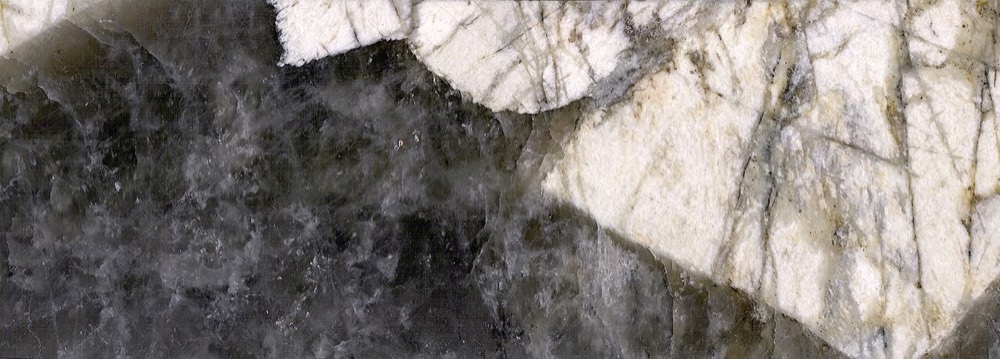
Granite-type rocks cooled slowly underground, so their crystals grew large enough to see without a lens. Look for interlocking grains of two or three colors with no layering and no holes. The properties that identify Granite — color: Light-colored felsic minerals (quartz, potassium feldspar, plagioclase) plus dark-colored mafic minerals (biotite, hornblende) give a 'salt and pepper' speckled appearance. For a rock, texture and grain size matter more than any single hardness number.
Tests you can do at home
- Mineral-composition test: granite's felsic minerals are quartz, potassium feldspar, and plagioclase feldspar; its mafic minerals are biotite and hornblende.
Often confused with
- Gneiss: Granite's crystals are interlocking but not aligned (no foliation); gneiss is a metamorphic rock whose minerals are aligned into visible banded foliation.
- Gabbro: Granite is light-colored because it is richer in silica; gabbro has lower silica content and is dark-colored.
Where it is found in North America
Yosemite National Park (part of the granite batholith of California's Sierra Nevada).
How to photograph it for identification
Photograph a fresh, unweathered surface in daylight, then a second shot of any crystal faces or broken edge. Include a coin for scale. If you did a streak test, photograph the streak next to the specimen. The app suggests the likely mineral or rock; confirm with hardness and the tests above before you label it.
Notes on this entry
Granite is a rock (an aggregate of multiple minerals), so it has no single Mohs hardness or specific gravity value — both fields are left blank. The Illinois State Geological Survey guide also confirms granite is 'one of the most widespread intrusive ... igneous rocks' (same Gutenberg source as above).
FAQ
How do I tell Granite from Gneiss?
Granite's crystals are interlocking but not aligned (no foliation); gneiss is a metamorphic rock whose minerals are aligned into visible banded foliation.
What is the simplest test for Granite?
Mineral-composition test: granite's felsic minerals are quartz, potassium feldspar, and plagioclase feldspar; its mafic minerals are biotite and hornblende.
More in Rock and Mineral Identification Reference
- How to Identify Obsidian: What to Look For and Home Tests
- How to Identify Chert / Flint: What to Look For and Home Tests
- How to Identify Agate: What to Look For and Home Tests
- How to Identify Petrified Wood: What to Look For and Home Tests
- How to Identify Basalt: What to Look For and Home Tests
- How to Identify Sandstone: What to Look For and Home Tests
- How to Identify Limestone: What to Look For and Home Tests
- How to Identify Shale: What to Look For and Home Tests
- How to Identify Slate: What to Look For and Home Tests
- How to Identify Marble: What to Look For and Home Tests
- How to Identify Quartzite: What to Look For and Home Tests
Related
See what's actually under your feet.
Start with a single scan.
Found one? Take a photo to identify it.
Sources
- USGSwww.usgs.gov/geology-and-ecology-of-national-parks/geology-yosemite-national-par
- pages.uoregon.edupages.uoregon.edu/millerm/NPlab1.html
Compiled by the RockLens editorial team
Every fact on this page is taken from the sources listed above; numbers and prices are copied from the source, and prices name the guide or auction and its date. Research and drafting were assisted by AI, and each claim was then checked against the cited sources. Checked 2026-09-10. We do not buy, sell or grade items; the app identifies what you photograph and points you to these references.